-
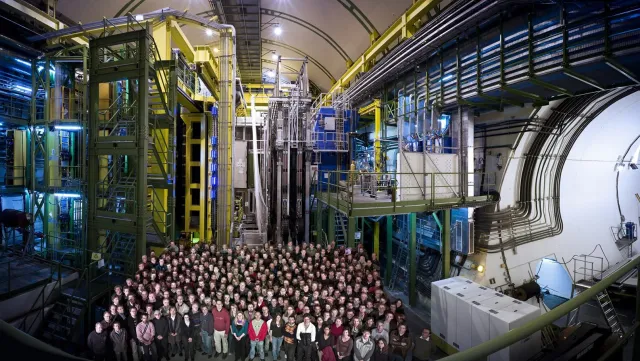
The LHC’s best 2025 discovery points the way to new physics
One of the biggest unanswered questions in all of theoretical physics is how the Universe came to have more matter than antimatter in it. In laboratory experiments, we can only create or destroy matter if we also create or destroy an equivalent amount of antimatter. But at some point in the Universe’s past, it must have happened. Although…
Written by
-
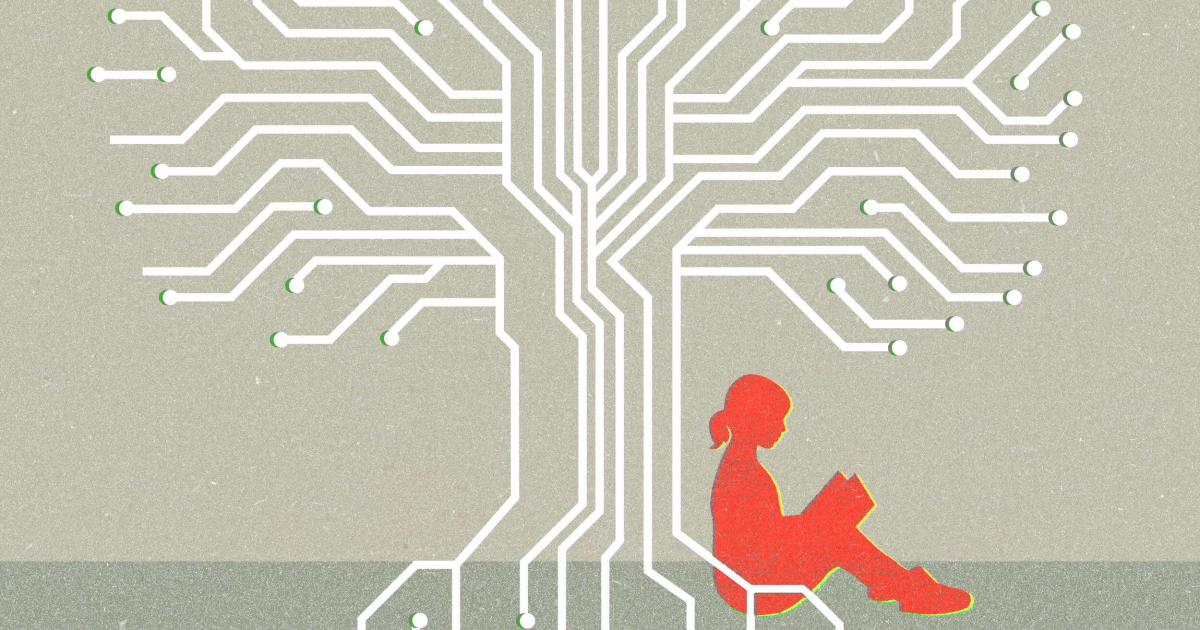
Google fellow: AI doesn’t pretend to be intelligent. It is.
Much of the ongoing discourse surrounding AI can largely be divided along two lines of thought. One concerns practical matters: How will large language models (LLMs) affect the job market? How do we stop bad actors from using LLMs to generate misinformation? How do we mitigate risks related to surveillance, cybersecurity, privacy, copyright, and the…
Written by

Explore the world’s biggest questions
Dive in and think big with us.
-
Will true AI turn against us?
Artificial intelligence is already everywhere. From Amazon product suggestions to Google auto-complete, AI has invaded nearly every aspect of our lives. The trouble is that AI just isn’t very good. Have you ever had a meaningful conversation with Siri or Alexa or Cortana? Of course not. But that doesn’t mean it always will be this

-
Are we alone in the universe?
For the longest time, belief in extraterrestrial life was considered a fringe viewpoint, more suitable for sci-fi conventions and fans of Star Trek or the X-Files. Today, it’s the exact opposite. Those who reject the notion of alien life are considered to be the outliers. This change in attitude occurred for several reasons, perhaps none
-
Is religion helping or hurting us?
Believers and non-believers alike agree on at least one thing: religion has had a tremendous influence on the history of humanity. But they generally disagree on everything else. Has religion been a net benefit or net cost to society? Are believers healthier and happier than non-believers? Can religion and science get along, or are they
-
Why are there conspiracy theories?
Stolen elections. Phony pandemics. Faked moon landings. Lizard people. It’s not just Americans who love a good conspiracy theory; it seems to be a trait shared by humans everywhere. It is a curious paradox that in the Age of Information — when all of our acquired knowledge is available at the click of a button
-
Should we trust science?
Science is given a privileged position in society. It is widely thought to be the ultimate arbiter of what constitutes true and false beliefs. Those who hold such a position claim that real-world problem-solving and technological advances are proof that science works. But there are objections. Yes, science can extend our lives with modern medicine,
-
Do we have free will?
Free will remains a hotly debated philosophical question today, as we have no means of proving or disproving it using the scientific method. Are all of our actions causally predetermined, and hence not free, or are we in fact free agents in charge of our decisions? Modern thinkers like Sam Harris espouse the view of scientific determinism, suggesting
Explore Questions →
Learn from the world’s biggest thinkers
Get insights from thought leaders across all fields and industries.